
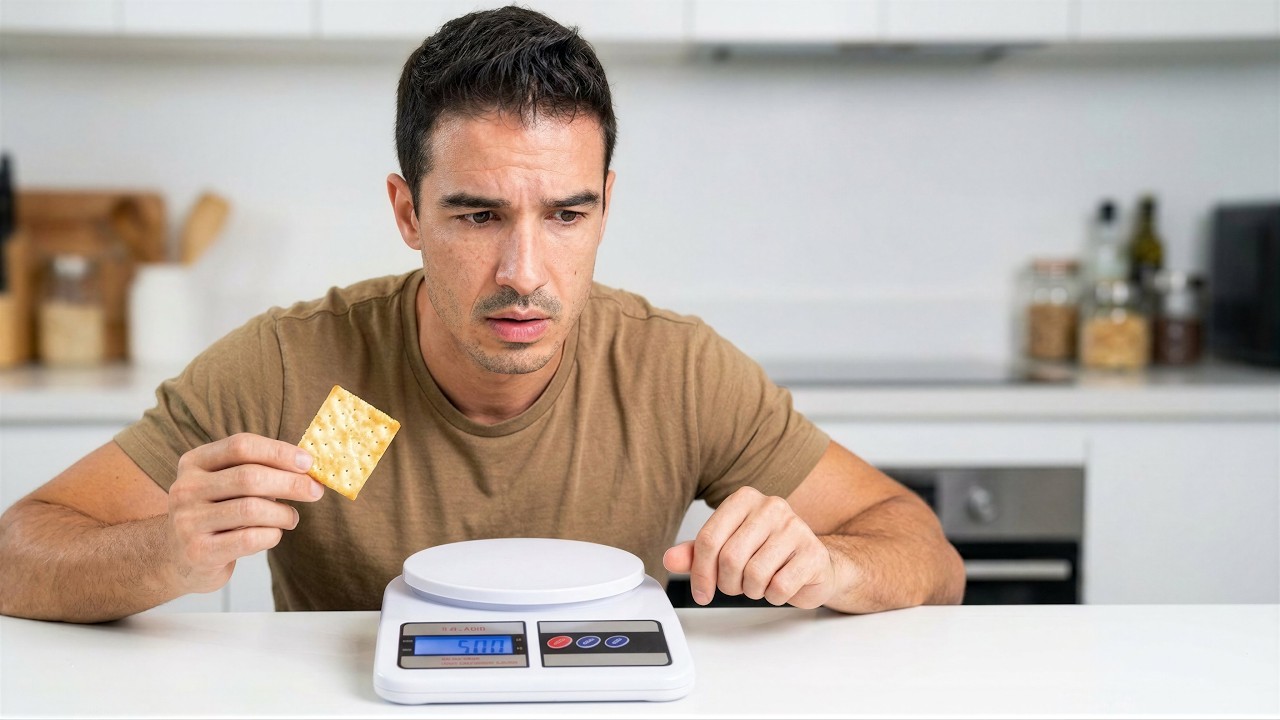
You know that calorie balance matters. You've tracked consistently, sometimes for months at a time. And yet food still feels like a source of stress rather than something you've mastered. Going to a restaurant makes you anxious because you can't weigh the plate. A day without logging feels like it's spiraling out of control.
I want to be honest with you here, even though I'm someone who actively recommends calorie tracking to clients: the tool itself might be the reason you feel stuck, not because tracking is flawed, but because of what it does to your relationship with food when it becomes the only strategy you have.
Tracking Was Never Supposed to Make You Anxious
Here's the pattern I see constantly with new clients who come to us with a tracking history. They log everything, lose weight, get burnt out, stop tracking, have no other guardrails in place, regain the weight, and start tracking again. It's not that the math stopped working. It's that tracking replaced the habits that were supposed to be built alongside it.
Research on this backs up what I see in practice. Adherence to calorie tracking tends to drop off significantly after 3 to 5 weeks. And there's real research linking regular, rigid tracking, weighing every single item, logging every bite, to increased anxiety around food and more dichotomous, all-or-nothing thinking about what's a "good" or "bad" food choice.
The people who struggle most with tracking aren't undisciplined. They're often the most detail-oriented, controlled people I work with, and that's exactly what makes them prone to over-relying on it.
Why It Hits Certain People Harder
I've noticed this over-reliance shows up most in people with a naturally type-A, detail-oriented personality, the kind of person who likes to have full control and certainty. Tracking gives you exactly that: an objective number, a clear answer. The problem is that real life, restaurants, holidays, other people cooking for you, doesn't offer that same certainty, and if tracking is your only tool, those situations become genuinely stressful instead of manageable.
Think of tracking like a household budget. A budget is incredibly useful for learning where your money goes and building better spending habits. But nobody's goal is to manually log every transaction forever. At some point the habits you built from budgeting, not overspending on certain categories, knowing your fixed costs, become automatic. Tracking calories works the same way. It's meant to teach you portion sizes, food substitutions, and how to make reasonable choices eating out, not to be a permanent crutch.
What Actually Builds the Confidence Tracking Can't
The real skill isn't logging every gram of food, it's building an intuitive sense of how to eat that holds up whether or not you're tracking that day. That comes from developing specific habits and behaviors alongside tracking, not instead of it, during the period you're actively working on fat loss.
I still encourage every client to track diligently for a solid stretch, generally 4 to 6 months if they've never done it thoroughly, because it teaches you things nothing else does: real portion sizes, which restaurant choices actually fit your goals, and where your food substitutions can flex. But the goal from day one is to use it as a temporary teacher, not a permanent identity.
At our practice, we structure this in three broad phases: a foundational phase focused purely on habits with no tracking at all, a goal-specific phase where tracking gets introduced to hit a target like fat loss, and a lifestyle phase where tracking frequency is deliberately reduced once the goal is met, so the habits underneath get tested and proven without the safety net removed all at once.
- Tracking isn't the problem, over-relying on it as your only strategy is.
- Rigid, anxious tracking is linked to worse long-term outcomes than a flexible approach, especially for detail-oriented, type-A personalities.
- Tracking should function like a budget: useful for learning, not meant to run forever.
- Confidence around food comes from habits built alongside tracking, not from the app itself.
- A foundational habits phase, before you ever open a tracking app, prevents the anxious, all-or-nothing relationship with food from forming in the first place.
If tracking currently feels like the only thing standing between you and regaining weight, that's not a sign you need to track harder. It's a sign the habits underneath were never built. Fix that, and the number in the app becomes information you're glad to have, not something you're afraid to live without.
Build the Habits That Make Tracking Optional
We help clients build the behavioral foundation that holds their results in place, with or without a tracking app. Apply and let's talk about your situation.
Apply Now →