
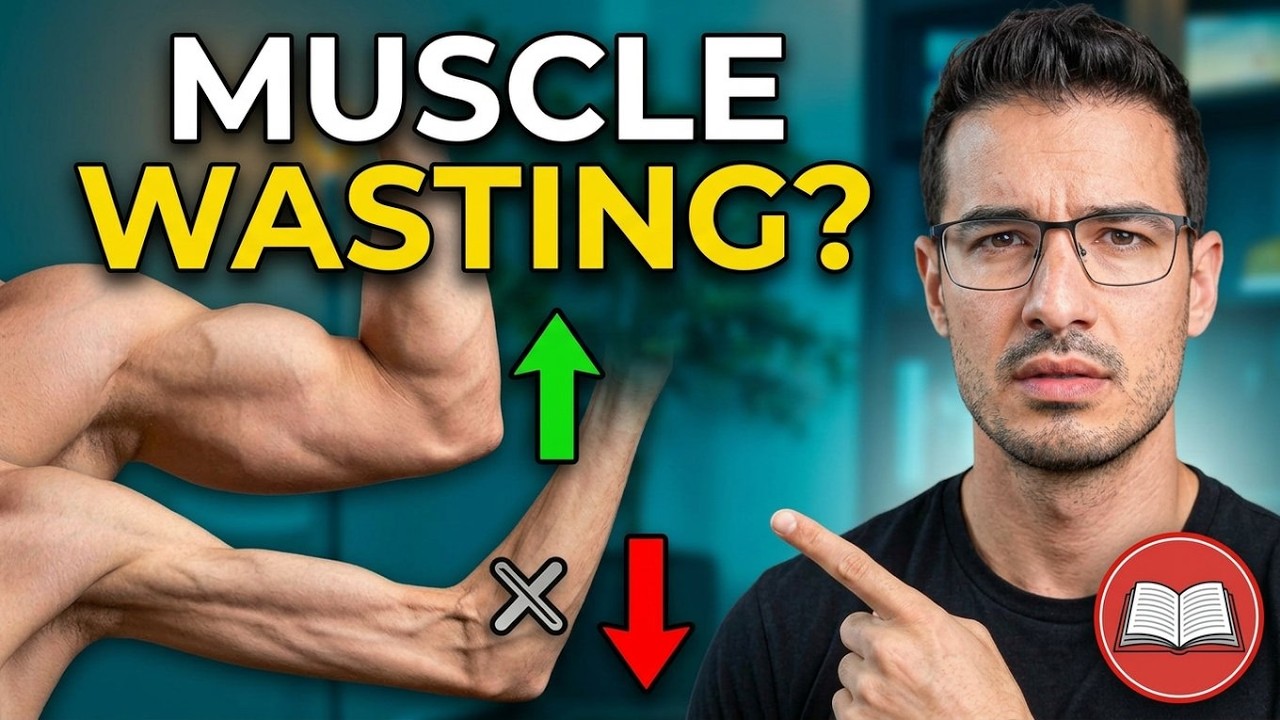
Millions of people are on GLP-1 medications right now, and the weight loss numbers are genuinely impressive. But there's a conversation almost nobody is having about what's happening underneath those numbers. Because when you look at the clinical trials closely, a significant portion of the weight people lose on these medications isn't fat. It's muscle.
About 25 to 40% of weight lost on GLP-1 medications is lean mass, mostly muscle, a similar ratio to regular dieting but much larger in absolute terms because total weight loss is bigger. Resistance training at least 3 times a week, hitting 0.8g of protein per pound of body weight, and capping your deficit protects muscle and helps prevent the rapid weight regain seen after stopping.
I want to be clear upfront: I have nothing against GLP-1s. They're legitimate, powerful tools. But tools only work well when you understand them fully, and right now most people starting on Ozempic or Mounjaro have no plan for what they're losing or what happens when they stop. This post is about closing that gap.
How GLP-1 Medications Actually Work
GLP-1 agonists were originally developed for managing type 2 diabetes. They work by mimicking glucagon-like peptide 1, a hormone your body naturally produces after eating. The medications produce this hormone at much higher levels and sustain it far longer than your body would on its own.
GLP-1 suppresses appetite through two simultaneous mechanisms. In the gut, it slows gastric emptying, meaning food moves through your stomach more slowly. Your stomach stays fuller longer, and stretch receptors signal your brain that you're satisfied. In the brain, GLP-1 travels to the hypothalamus, the hunger regulation center, where it amplifies the "I'm full" signal and reduces the "I want food" signal at the same time.
The result is appetite suppression powerful enough that people can sustain caloric deficits much larger than they could ever achieve through willpower alone. That's why the weight loss numbers are so dramatic. But that same large deficit is also why the muscle loss numbers are significant.
GLP-1 medications don't have a unique muscle-wasting mechanism. The problem is that they create such a large deficit, so quickly, that the absolute amount of muscle lost becomes substantial even when the ratio is similar to regular dieting.
What the Clinical Trials Actually Show
Two major series of trials give us the clearest picture of what GLP-1s do to body composition.
| Trial | Drug | Duration | Avg. Weight Loss | Lean Mass Lost |
|---|---|---|---|---|
| STEP Trials | Semaglutide (Ozempic/Wegovy) | 68 weeks | ~15% of body weight | 38–40% of total loss |
| SURMOUNT Trials | Tirzepatide (Mounjaro/Zepbound) | 72 weeks | ~21% of body weight | 25–33% of total loss |
To put those numbers in real terms: in the STEP trials, a 200-lb person lost roughly 30 lbs on average over 16 months. About 12 of those pounds came from lean mass. Only around 18 lbs was actually fat. For every 5 lbs lost, about 2 came from muscle.
The SURMOUNT trials showed a somewhat better ratio with tirzepatide, around 25 to 33% lean mass loss versus 38 to 40% on semaglutide. But the total weight loss was also higher, so the absolute numbers were still significant: roughly 10 to 14 lbs of lean mass lost on average.
An important clarification: most of these studies measure lean mass, not purely muscle. Lean mass also includes water, glycogen, and connective tissue. But lean mass and muscle track together closely enough that losing lean mass means losing muscle.
Is this worse than dieting without GLP-1s?
Not proportionally. A 2007 meta-analysis in the Journal of Obesity Reviews looked at 28 weight loss studies and found that lean mass accounts for 13 to 35% of total weight lost during caloric restriction without resistance training. That's a similar ratio to what the GLP-1 trials show.
The difference is in the absolute numbers. Without medication, most people lose 8 to 10 lbs over 6 months and might lose 3 lbs of lean mass. On semaglutide, someone might lose 30 lbs over the same period and lose 10 lbs of lean mass. The ratio is similar. The damage to your muscle is not.
Why This Matters More Than Most People Realize
Muscle is metabolically active tissue. The more you have, the more calories you burn at rest. Losing substantial muscle while on a GLP-1 doesn't just affect how you look. It slows your metabolism, making it harder to maintain your results after you stop.
Here's the sequence that plays out for most people who use GLP-1s without a plan: they lose significant weight, including significant muscle. They come off the medication when hunger returns to normal. But now they're burning fewer calories than before because they have less muscle. More hunger, lower metabolism. Weight comes back fast.
The STEP 4 trial measured exactly this. Participants who stopped their GLP-1 medication regained approximately two-thirds of the weight they'd lost within just one year. That's not a character flaw. It's a predictable physiological outcome when the tool is removed and nothing structural has been built to replace it.
There's also a longer-term concern. GLP-1 use compounds age-related muscle loss. After 30, we naturally lose 3 to 8% of muscle per decade through sarcopenia. Rapid weight loss on top of that accelerates the process. The muscle mass you carry at 60 directly determines your physical independence at 70 and 80. Falls and hip fractures are among the leading causes of death in older adults, and most of that risk is preventable by maintaining adequate muscle.
What to Do About It: A Practical Plan
The good news is that muscle loss during GLP-1 use is not inevitable. My team and I have worked with clients who successfully transitioned off these medications and maintained their results because they built the right habits while on them. Here's exactly what that requires.
The question I'd ask anyone currently on a GLP-1 or considering starting one: what is your plan for when you come off it? If the answer is "I'll figure it out then," you're setting yourself up for the two-thirds weight regain the research predicts. The medication doesn't teach you how to eat, it doesn't build habits, it doesn't fix the lifestyle factors that contributed to the weight in the first place. It creates a window. What you do inside that window determines whether your results last.
- GLP-1 medications work by mimicking a satiety hormone, creating large caloric deficits through powerful appetite suppression, not by any direct fat-burning mechanism.
- About 25 to 40% of weight lost on GLP-1s is lean mass, primarily muscle. That's roughly similar to dieting alone, but the absolute numbers are much larger because total weight loss is much greater.
- Losing substantial muscle slows metabolism, making weight regain nearly guaranteed when the medication stops. The STEP 4 trial showed two-thirds of lost weight returned within one year of stopping.
- Resistance training at least 3 times per week is the non-negotiable intervention for preserving muscle during GLP-1 use. Protein at 0.8 g per pound of body weight daily is the dietary counterpart.
- Intentionally slow your rate of weight loss even on GLP-1s. Use the appetite suppression to eat well, not to eat as little as possible. Build habits that will outlast the medication.
GLP-1s are a genuinely powerful tool when used with the right support structure around them. The weight loss is real. The muscle loss risk is also real. Knowing both, and having a plan for both, is the difference between a transformation that lasts and one that reverses in a year.
Frequently Asked Questions
Is muscle loss on GLP-1s worse than regular dieting?
Not proportionally. The ratio of lean mass to total weight lost is similar to dieting without medication, around 25 to 40%. The difference is the absolute numbers: because total weight loss on GLP-1s is much larger, the actual pounds of muscle lost end up being significantly higher.
How much weight comes back after stopping a GLP-1 medication?
The STEP 4 trial found participants regained approximately two-thirds of their lost weight within one year of stopping. Losing significant muscle while on the medication lowers metabolism, which is a major driver of that rebound if no training or nutrition habits were built during treatment.
How much protein should I eat while on a GLP-1 medication?
Target about 0.8 grams per pound of body weight daily, using your target body weight if you have significant weight to lose. Appetite suppression can make hitting that number difficult, so prioritizing protein at every meal and using protein powder to close gaps is often necessary.
Can I prevent muscle loss while losing weight on Ozempic or Mounjaro?
Yes, though not entirely. Resistance training at least 3 times a week is the single most evidence-based way to preserve muscle during a deficit. Combined with adequate protein and a capped, more moderate rate of weight loss, most people can significantly limit how much lean mass they lose.
On GLP-1s and Need a Plan?
We help clients build the training and nutrition habits that protect muscle during GLP-1 use and maintain results after stopping. Apply and let's build your plan together.
Apply Now →