
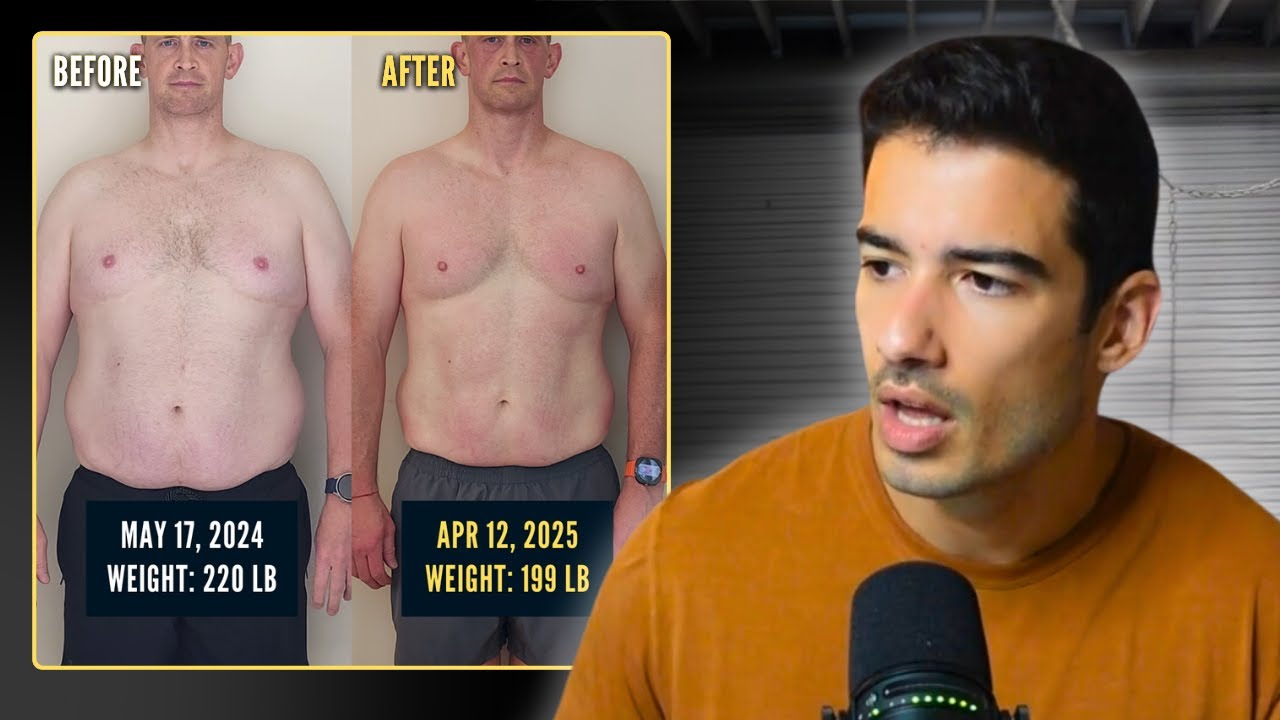
After 20 years of yo-yo dieting, what actually changed things for Nate wasn't another diet or even surgery, it was addressing his relationship with food directly: recognizing food as a coping mechanism, unlearning the habit of finishing every plate, and gradually shifting food's role from emotional comfort to nutrition and energy.
Nate has been yo-yo dieting for 20 years. Married, father of four, working full-time in IT for a bank, he'd identified as "the chubby fat kid who isn't meant to look a certain way" for most of his life. Over the past year of coaching, he's lost over 30 pounds of fat, built muscle, and made a change he says matters even more than the number on the scale.
Food as a Coping Mechanism
Nate describes his old relationship with food plainly: it was his coping mechanism. On hard days, he'd swing from too much ice cream to too many potato chips and back again, not out of hunger, but trying to fill something else entirely, a feeling of not being good enough, or dissatisfaction at work.
I've moved from food being my coping mechanism, to being a source of nutrition, a source of energy.
Growing up overweight taught him, in his words, that food would satisfy that need somehow. It's a pattern a lot of people recognize in themselves once someone names it clearly: not physical hunger, but an emotional one, answered with food because it was available and immediate.
The "Clean Plate" Mentality He's Still Unlearning
One habit Nate says he still actively works on is leaving food on his plate, even when he's full. He described the discomfort of that "I've got to finish this" mentality, even knowing rationally that nothing bad happens if food goes back in the fridge or gets thrown away.
He shared a specific memory that stuck with him: eating a huge portion at a restaurant, then finishing what everyone else at the table left too, until he felt sick, all because finishing everything felt like proving something. That instinct, learned early, kept surfacing years later even once he'd started actively working on his weight.
Why Surgery Didn't Fix the Real Problem
Before coaching, Nate had double jaw surgery, partly hoping it would help with his weight. He remembers asking his surgeon directly if he could guarantee 20 pounds of weight loss from the procedure. The surgeon said yes, and also told him it would all come back.
That answer was devastating in the moment, he says, because he'd been counting on the surgery as the thing that would finally fix his weight problem. It did resolve his jaw issue. It didn't touch the eating patterns and coping mechanisms that had driven the weight gain in the first place, because those were never a surgical problem to begin with.
What Actually Changed Beyond the Scale
Nate's physical progress extended beyond weight loss. He'd struggled with knee discomfort and sciatica that made him question whether he'd ever run a race again, after years running the Charlotte Half Marathon, his hometown race. Through consistent training, he not only got back to running it, he cut 10 minutes off his previous time, nearly a minute faster per mile across 13 miles.
- An unhealthy relationship with food often means using it as a coping mechanism for stress or dissatisfaction, not hunger.
- The instinct to finish every plate, even past fullness, is a learned pattern that can persist for decades.
- Surgery or other physical interventions can address a physical issue without touching the eating patterns underneath weight gain.
- Real change often means shifting food's role from emotional coping to nutrition and energy, not eliminating food altogether.
- Addressing the relationship with food alongside training produced physical results that went beyond the scale, including a faster half marathon.
Nate's story is a reminder that the number on the scale is rarely the whole problem. For a lot of people, what actually needs to change is the relationship with food sitting underneath it, and that shift can take longer to build than any single diet, but it tends to be the one that finally sticks.
Frequently Asked Questions
What does it mean to have an unhealthy relationship with food?
It looks different for everyone. For Nate, it meant using food as a coping mechanism during stress or dissatisfaction, and struggling to leave food on his plate even when full. For others it might show up as food noise, constantly thinking about food in social situations.
Does weight loss surgery fix an unhealthy relationship with food?
Not on its own. Nate had jaw surgery expecting it to solve his weight problem, and it produced some weight loss, but the surgeon was clear the weight would return without addressing the underlying habits. The surgery fixed a physical issue, not the eating patterns behind the weight.
Why is "finishing your plate" sometimes an unhealthy habit?
The instinct to finish food even past the point of fullness, sometimes rooted in upbringing or cultural norms, can lead to regular overconsumption that has little to do with actual hunger and more to do with a learned mental pattern.
How did coaching help Nate improve his relationship with food?
Over about a year of coaching, Nate moved from using food primarily as a coping mechanism to using it primarily as a source of nutrition and energy, while losing over 30 pounds of fat and building muscle along the way.
Ready to Build a Body That Lasts?
Science-backed coaching for busy professionals over 40. Apply today for support that addresses the habits underneath the number on the scale.
Apply Now →