
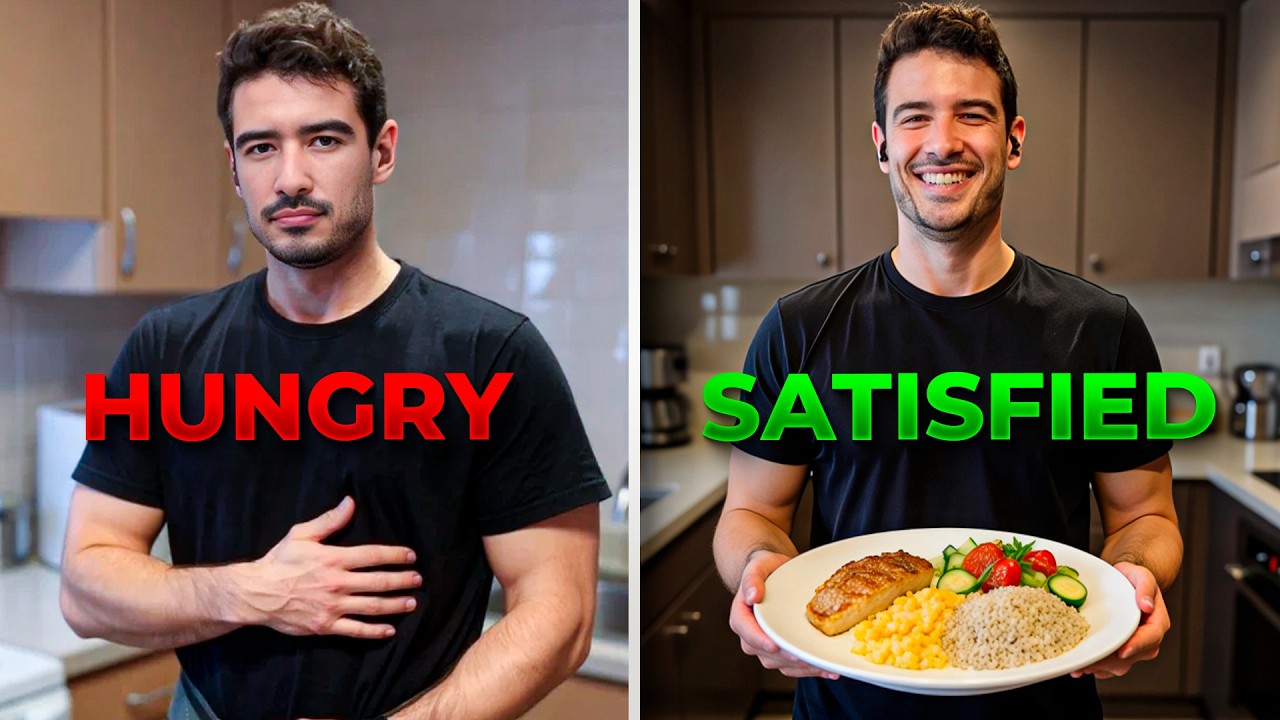
You've done the math. You're eating less than you burn, on paper it should be working, and yet by 3pm you're thinking about food constantly. By dinner you're fighting the urge to eat everything in the kitchen. Somewhere around week two, you give in, eat past the point of hunger, and feel like you failed at something that was supposed to be simple.
A calorie deficit feels hungry when you just eat less of the same foods. Prioritize minimally processed, high-protein, high-fiber foods, drink water before meals, front-load your calories earlier in the day, and protect your sleep. Same deficit, far less hunger.
Here's what's actually happening: a calorie deficit is not optional for fat loss, but the way most people create that deficit is the exact thing making them miserable. The problem isn't your willpower. It's that you took your normal diet and just ate less of it, without changing what you're eating or when. That approach is almost guaranteed to leave you hungry, and hungry people don't stick to diets for long.
Why Eating Less of the Same Foods Backfires
Energy balance is simple in theory: eat fewer calories than you burn, and you lose weight. The mistake happens in execution. Most people take their existing diet, the same foods in roughly the same proportions, and just serve themselves smaller portions of it. Go from two pounds of food a day to one pound of the same food, and your stomach notices immediately. The result is predictable: increased cravings, harder consistency, and eventually overeating that undoes the deficit entirely.
The fix isn't eating less of the same foods. It's changing what those foods are, so the deficit doesn't feel like a constant fight against hunger. I walk every new client through this same reframe before we talk about anything else, because it's the difference between a diet that lasts and one that collapses in two weeks.
The Food Quality Fix: Why Some Foods Keep You Full and Others Don't
Foods exist on a spectrum of processing, not a binary. An apple is minimally processed. Apple slices, still minimally processed. Applesauce, a little more. Apple juice, more still. Apple pie, more again. An apple-flavored gummy bear barely resembles an apple at all. The further a food moves along that spectrum, the less it satisfies you per calorie, a relationship researchers call the satiety index.
The most satiating foods per calorie are things like oranges, fish, steak, potatoes, and beans: minimally processed, and typically high in either protein, fiber, or both. The least satiating are chips, cookies, donuts, and cakes. A 2019 study by metabolic researcher Kevin Hall put this to the test directly. Twenty adults ate two weeks of an ultra-processed diet and two weeks of a minimally processed diet, both matched exactly for calories, macronutrients, sugar, and sodium, with unlimited access to food in both conditions.
A donut and an orange might feel similarly easy to eat, but a donut is 400 calories and an orange is about 100. The fair comparison isn't one donut to one orange, it's one donut to four oranges, and nobody eats four oranges without noticing.
The Two Macros That Actually Control Your Hunger
Protein and fiber are the two most satiating macronutrients, and most people undereat both while dieting. I set every client's protein target at a minimum of 0.8 grams per pound of goal body weight, not current weight. If you're at 200 lbs with a goal of 150, you're targeting roughly 120 grams of protein a day, and going higher rarely hurts.
Fiber targets run about 14 to 16 grams per 1,000 calories consumed, which lands most people between 25 and 35 grams a day. Raspberries, avocados, beans, and whole grain bread are reliable sources. A 2014 study comparing a high-protein yogurt snack to high-fat snacks, all matched for calories, found the protein group stayed full 30 minutes longer and ate 100 fewer calories at dinner that same day, without being told to eat less.
- Greek yogurt
- Mozzarella cheese
- A protein shake
- Boiled eggs
- Apples, bananas, or oranges
- Carrots with hummus
The Simplest Lever: Drinking Water With Your Meals
This one takes zero willpower. A 2016 study by Corney and colleagues had one group drink 500 milliliters of water before breakfast and another group drink none. Both groups then ate as much breakfast as they wanted. The water group ate 140 fewer calories, and critically, reported feeling just as full and just as satisfied as the group that skipped the water. You're not sacrificing satisfaction, you're getting the same fullness for fewer calories.
Why Meal Timing Changes How Hungry You Feel All Day
A 2013 study split overweight and obese women into two groups eating the identical 1,400 calories a day, distributed differently. One group ate a large 700-calorie breakfast tapering down to a small dinner. The other ate a small breakfast building up to a large 700-calorie dinner. Same total calories, same foods available. The large-breakfast group reported significantly less hunger throughout the entire day.
Regularity matters just as much as size. A 2002 review of weight loss data found that people who ate similar-sized meals at similar times every day lost more weight than people whose meal size and timing varied day to day. You don't need a specific number of meals, two, three, or four all work, but whatever pattern you pick, keep your breakfast the same size every day and your lunch the same size every day.
The Factor Most People Never Connect to Hunger: Sleep
A 2010 study by Brondel and colleagues restricted one group of participants to about 5 hours of sleep and let another sleep a full 8, then gave both groups an identical controlled breakfast followed by unlimited lunch and dinner. The sleep-restricted group reported being significantly hungrier before both meals, despite eating the exact same breakfast, and ate roughly 500 additional calories over the day.
That's not a willpower failure, it's physiology. Poor sleep directly shifts the hormones that regulate hunger and fullness. If you're doing everything right with food and still fighting hunger constantly, sleep is the variable I check next. Keep your room cool and dark, limit screens before bed, and go to sleep and wake up at consistent times. It's unglamorous advice, but it's one of the highest-leverage changes available.
- Eating less of the same foods almost always backfires. Change what you eat, not just how much.
- Minimally processed, high-protein, high-fiber foods keep you fuller per calorie than processed alternatives, even at identical nutrition facts.
- Target at least 0.8g of protein per pound of goal body weight and 25 to 35g of fiber daily.
- Drinking water before meals cuts calorie intake without reducing how full or satisfied you feel.
- A bigger breakfast, consistent meal timing, and real sleep all independently reduce hunger throughout the day.
None of these strategies require perfection. You don't need to hit every target every day, you need to move in the right direction until you find what works for your schedule and your goals. The calorie deficit was never the problem. Eating the same foods in smaller amounts was. Change the inputs, and staying in a deficit stops feeling like something you have to white-knuckle through.
Frequently Asked Questions
How much protein and fiber should I eat to feel less hungry in a deficit?
Aim for at least 0.8 grams of protein per pound of your goal body weight, and 14 to 16 grams of fiber per 1,000 calories consumed, which lands most people between 25 and 35 grams a day. Both are the two most satiating macronutrients, and most people undereat them while dieting.
Does drinking water before meals actually reduce hunger, or just fill you up temporarily?
Research shows it genuinely reduces calorie intake without reducing how full or satisfied people feel afterward. In one study, participants who drank water before breakfast ate 140 fewer calories while reporting the same satisfaction as those who skipped the water.
Should I eat a bigger breakfast or a bigger dinner?
A bigger breakfast tapering down to a smaller dinner reduces hunger throughout the entire day compared to the reverse pattern, even at identical total calories. A large meal right before bed largely wastes its satiating effect while you sleep through it.
Why does poor sleep make me hungrier even if I eat the same food?
Sleep restriction directly shifts the hormones that regulate hunger and fullness. In one study, participants sleeping about 5 hours reported significantly more hunger and ate roughly 500 more calories over the day than those sleeping 8 hours, despite eating an identical breakfast.
Tired of Dieting Hungry?
We build nutrition plans around real food, real satiety, and your actual schedule, not just a calorie number. Apply and get a plan that doesn't leave you starving.
Apply Now →