
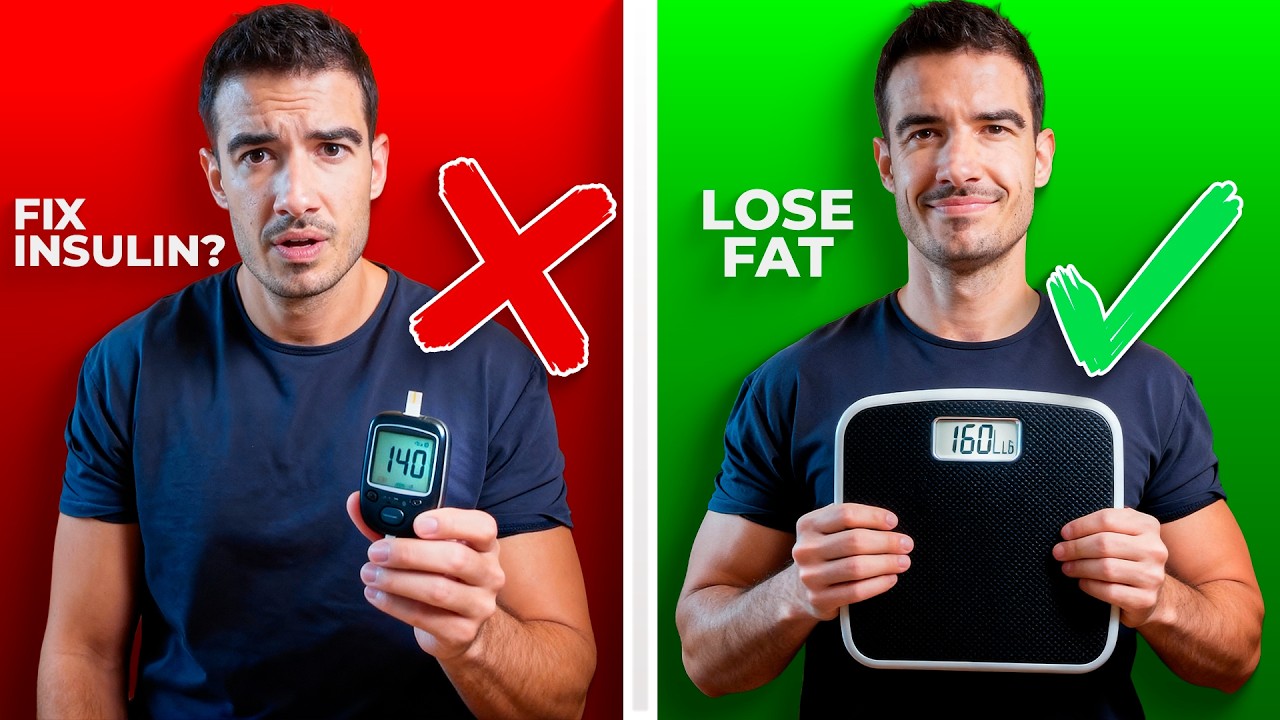
No, having insulin resistance does not mean you need to eliminate carbohydrates. Insulin's job is to help move glucose from your blood into your muscles, liver, and fat tissue. Fasting or going keto can lower insulin levels short term, but that's not the same as being uniquely necessary. This is general education, not medical advice, so talk to your doctor about your specific situation.
You've probably seen a version of this claim online: a doctor or influencer confidently stating that if you have insulin resistance, fasting is the only way to lose weight, because it naturally lowers your insulin levels. The conclusion that follows is always the same. Avoid carbs. Avoid fruit. Avoid anything that raises your blood sugar.
I'm Dr. Joey Munoz, and before you restructure your entire diet around that advice, I want to walk you through what insulin actually is and what it actually does, so you understand where this claim comes from and why it tells an incomplete story.
Where This Claim Comes From
"Fasting is the only way to lose weight if you have insulin resistance, because it naturally lowers your insulin levels."
This kind of statement shows up constantly, often from people with real credentials, on major platforms. It leads people to believe they have to fast, go keto, and avoid carbs entirely, including fruit, if they want to lose weight with insulin resistance in the picture.
To understand why this claim oversimplifies things, you first need to understand what insulin is actually doing in your body, separate from the fear-based framing around it.
What Insulin Actually Does
Insulin is a hormone released from beta cells in your pancreas. It's released in response to rising glucose levels in your blood. When you eat carbohydrates, they get broken down into glucose, and as glucose rises in your bloodstream, your pancreas releases insulin.
Insulin's main role is to lower blood glucose levels by helping shuttle that glucose out of the blood and into tissues like your muscle, liver, and fat. Without enough insulin activity, it becomes harder for your body to bring blood sugar back down, which is exactly why insulin resistance is associated with higher blood sugar levels.
Your body is generally either in an anabolic state, storing and building, or a catabolic state, breaking down stored tissue for energy. Insulin plays a role in this because when insulin is elevated, it does somewhat suppress the breakdown of stored fat. This is the piece that gets isolated and turned into the scary headline: "high insulin blocks fat loss."
Why That's Only Half the Story
Here's what that claim leaves out: insulin resistance means your cells respond less efficiently to insulin's signal. If insulin's suppressive effect on fat breakdown is part of the concern, insulin resistance actually reduces that suppression too, not just the glucose-lowering effect.
That's a meaningful nuance that the simplified "high insulin equals stuck fat loss" narrative skips entirely. It's not that insulin resistance gives you a free pass on fat loss, it's that the relationship between insulin and fat loss is more complicated than a single viral claim can capture.
Insulin does suppress fat breakdown while it's elevated, but insulin resistance reduces that suppression too. The claim only tells half the story.
This is exactly the kind of nuance that gets lost when complex physiology gets compressed into a 60-second clip designed to grab attention rather than explain a mechanism accurately.
What Fasting and Keto Actually Change
Fasting and ketogenic diets do lower insulin levels, that part is true. But they lower insulin primarily because you're either not eating at all, or you're eliminating the macronutrient, carbohydrates, that triggers the biggest insulin response. That's a mechanical effect of the approach, not proof that lowering insulin through those specific methods is uniquely necessary for fat loss.
Any approach that creates a calorie deficit and improves body composition over time tends to improve insulin sensitivity as a downstream effect, not just fasting or keto specifically. The improvement in insulin sensitivity tends to follow the fat loss, rather than fat loss requiring you to fix insulin first.
- Insulin's core job is helping move glucose from your blood into your muscle, liver, and fat tissue.
- Insulin resistance means reduced sensitivity to insulin's signal, not an automatic block on losing weight.
- Insulin resistance also reduces insulin's fat-breakdown-suppressing effect, which the popular claim leaves out.
- Fasting and keto lower insulin mechanically, by restricting food or carbs, not because they're the only path to better insulin sensitivity.
- This is general education about how insulin works, not medical advice. Talk to your doctor about what's right for your specific health situation.
Understanding what insulin actually does doesn't require you to fear carbohydrates or hand your diet over to whichever version of "fix your insulin" trends next. It requires understanding the actual mechanism well enough to know when a viral claim is telling you the whole story, and when it isn't.
Frequently Asked Questions
Do you need to cut out carbs if you have insulin resistance?
No, not automatically. Insulin resistance means your cells respond less efficiently to insulin, not that carbohydrates themselves are dangerous. Most people with insulin resistance can still eat carbohydrates as part of a balanced diet, especially when combined with weight management and resistance training.
What does insulin actually do in the body?
Insulin is a hormone released by the pancreas in response to rising blood glucose. Its main job is to help shuttle glucose out of the blood and into tissues like muscle, liver, and fat, which lowers blood sugar levels.
Does fasting or keto fix insulin resistance?
Fasting and keto can lower insulin levels in the short term simply because you're eating less or avoiding carbohydrates, but they aren't uniquely required to improve insulin sensitivity. Any approach that supports fat loss and consistent training tends to improve insulin sensitivity over time.
Why do people believe carbs are the main cause of insulin resistance?
Because insulin rises after eating carbohydrates, it's an easy but incomplete leap to blame carbs directly for insulin resistance. In most cases the underlying driver is excess body fat and the chronic inflammation it produces, not carbohydrate intake itself.
Ready to Build a Body That Lasts?
Science-backed coaching for busy professionals over 40. Apply today for a nutrition strategy built on how your body actually works, not viral fear-based rules.
Apply Now →