
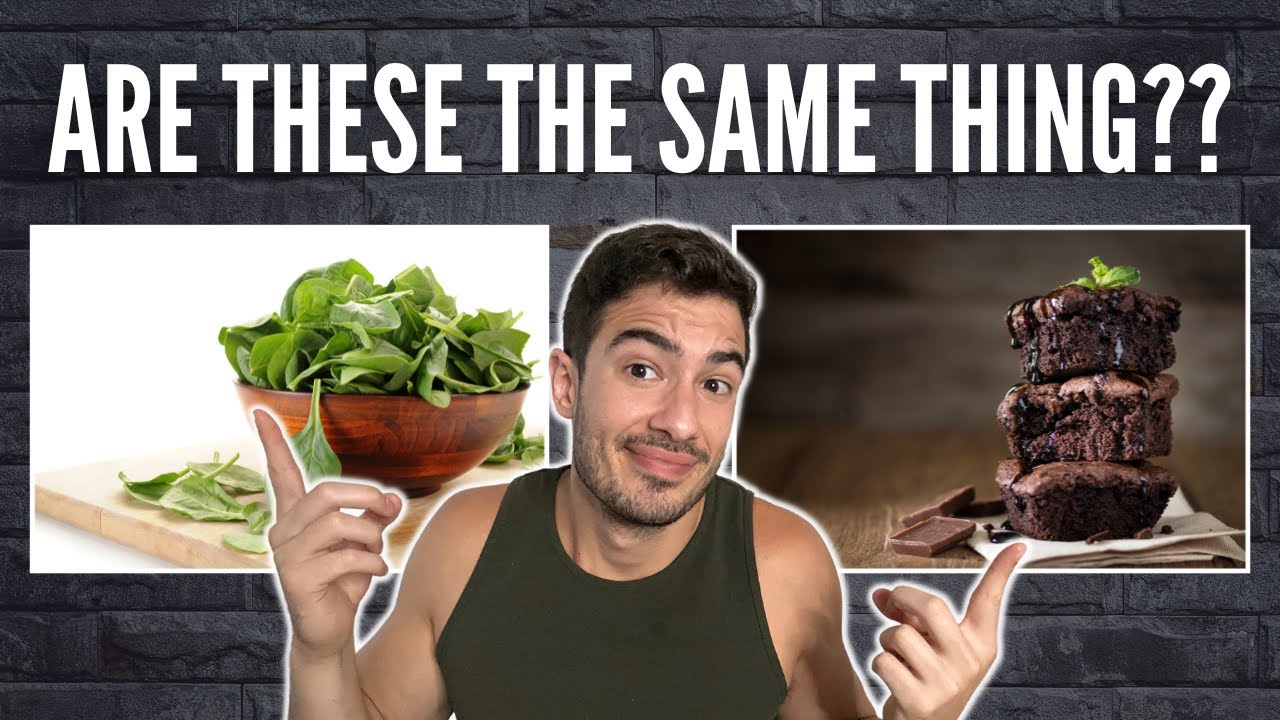
A calorie is a unit of energy, so it says nothing about a food's quality. Fat loss depends on energy balance, meaning how much energy you eat compared with how much you burn. Food choices still matter, but mainly because they change how many calories you end up eating, through fullness and how easy a food is to overeat.
Some doctors argue that calories don't matter for fat loss and that food quality is all that counts. The claim sounds reasonable because a brownie is clearly not the nutritional equal of kale. Dr. Joey explains why that argument mixes up two different things.
What a Calorie Actually Is
A calorie is not a physical thing.
It is a unit of measurement, the same way pounds measure mass and meters measure distance. A food with 100 calories gives your body an amount of energy equal to 100 calories. By definition, that number says nothing about how nutritious the food is.
Why Calories Matter for Fat Loss
Your body needs energy every day to keep you alive, run your organs, regulate your temperature, and move. If you eat less energy than that, your body draws on stored energy such as body fat, and the result is weight loss. If you eat more than you need, the excess is stored as fat. Both outcomes depend on the energy balance, not on which foods supplied it.
In theory, you could gain weight eating apples and spinach, although it would be hard because those foods contain few calories. You could also lose weight eating brownies and cookies if you simply eat little enough. One nutrition professor lost 27 pounds eating mostly ultra-processed foods while tracking his calories. Dr. Joey doesn't recommend that approach, but it shows that calories do matter.
So Do Food Choices Matter?
Yes, and the answer is both, not one or the other. The reason is that food choices change how much you eat.
A study published in the journal Cell compared a diet of mostly ultra-processed foods with one of mostly unprocessed foods. The meals were matched for calories, energy density, macronutrients, sugar, sodium, and fiber, and participants could eat as much as they wanted. The ultra-processed group ate significantly more, mostly extra carbohydrate and fat, and gained about two pounds, while the unprocessed group lost about two pounds.
The foods didn't cause the change on their own. They made it easier to eat too much.
Fullness Is the Missing Piece
The satiety index ranks how filling common foods are. Chips, cookies, and chocolate bars score low, while steak, fish, and fruit score much higher. You can technically lose weight on chips and ice cream, but you'll be hungry much of the time, and hunger is what pushes people to go over their calories.
Whole foods also bring more fiber, vitamins, and minerals. That said, processed foods aren't inherently unhealthy. They are delicious and easy to overeat, which is the real issue. A brownie isn't fattening because it's junk food, and sugar, saturated fat, or artificial sweeteners don't cause weight gain outside the context of your total calories.
- A calorie is a unit of energy and has nothing to do with a food's nutritional quality.
- Fat loss depends on energy balance, meaning the energy you eat compared with the energy you burn.
- Food choices matter mainly because they change how many calories you eat, not because certain foods cause fat gain.
- In a controlled study, people eating mostly ultra-processed foods ate more and gained about two pounds, while the unprocessed group lost about two.
- Prioritize protein, whole foods, and fewer liquid calories to feel full and make a deficit easier to follow.
The useful question isn't calories or food quality. Focus on both: a well-balanced diet makes it easier to eat less, lose fat, and improve your health.
Frequently Asked Questions
Is a calorie of brownie the same as a calorie of kale?
As energy, yes, because a calorie is just a unit of measurement. Their nutrition is very different, and kale is far more filling per calorie, which makes it easier to stay in a deficit.
Do calories matter for weight loss?
Yes. Weight loss comes from eating less energy than your body burns, so it depends on total calories. Food choices influence how many calories you end up eating.
Why do ultra-processed foods lead to weight gain?
In a controlled study, people eating mostly ultra-processed foods ate significantly more calories without trying to. The foods are easy to overeat and less filling, not magically fattening.
What foods help you feel full on a diet?
High-protein foods, whole foods like meat, fish, and fruit, and fewer liquid calories. These rank higher on the satiety index and make a calorie deficit easier to stick to.
Ready to Build a Body That Lasts?
Science-backed coaching for busy professionals over 40. Apply today for a plan that balances calories and food quality.
Apply Now →