
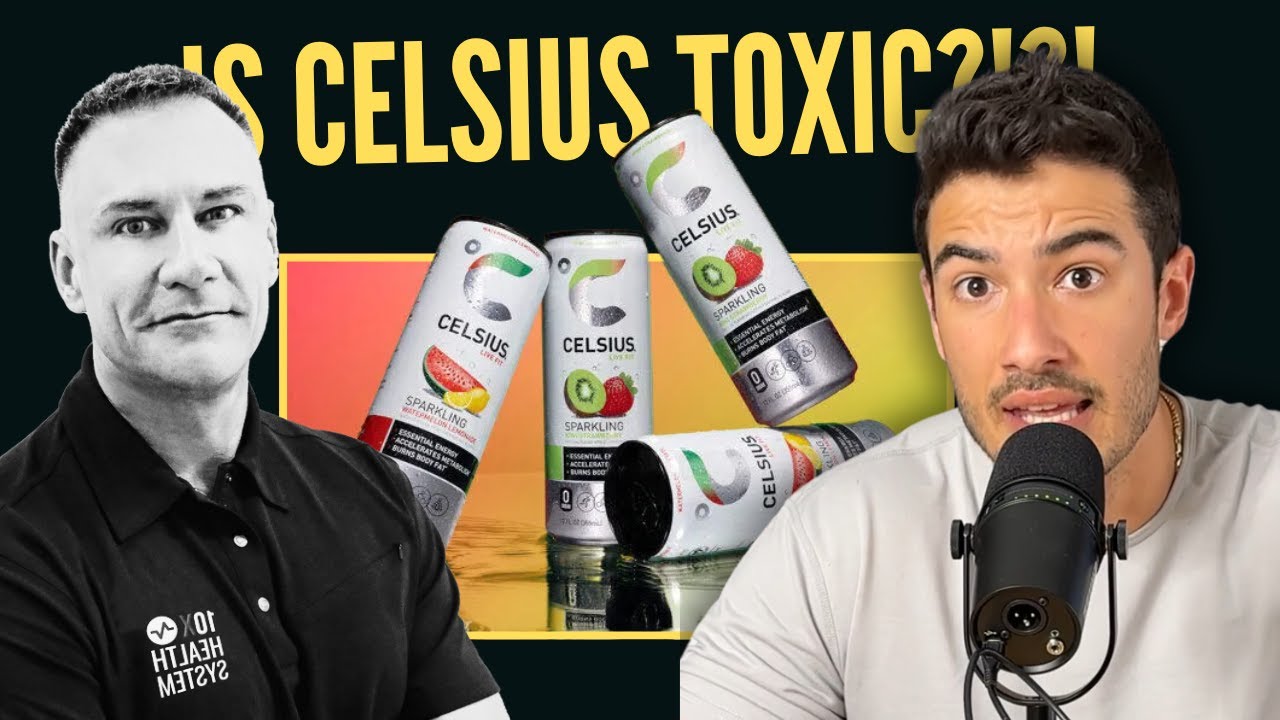
A video clip started circulating on social media and it went viral fast. In it, Gary Brecka - a self-described human biologist with millions of followers - claims that Celsius energy drinks contain four times the daily allowable amount of cyanide. He presents it as a public health warning. He tells viewers to drink Monster or Bang instead.
The claim is false. Celsius contains cyanocobalamin, a form of vitamin B12, not free cyanide. The actual cyanide released from one can is about 0.05 micrograms, less than 1% of the daily safe limit for an adult. The viral claim is off by more than 400 times.
If someone sees that clip and feels a spike of alarm, that was the intended reaction. Alarming claims spread. But before throwing out a Celsius or restructuring an entire supplement stack around the advice of someone who just said "cyanide is in your energy drink," it is worth doing what Gary did not: running the actual numbers.
The Claim, Exactly as He Made It
This is specific enough to verify. If the claim is true, the math should confirm it. If it is false, the math will reveal exactly how false - and by how much. I ran the numbers myself, so let's work through it step by step.
First: What Is Cyanide, and Is Any Amount Safe?
Cyanide is a real compound and yes, in sufficient quantities, it is toxic. That part of the framing is not wrong. What is wrong is the implication that any amount of cyanide is immediately dangerous.
The human liver produces an enzyme called rhodanese that converts cyanide into thiocyanate, a non-toxic compound that is then excreted through urine. Small amounts of cyanide that enter the body are cleared through this pathway continuously and efficiently. The process only fails when the amount of cyanide overwhelms the liver's capacity to process it - which requires doses orders of magnitude above what any food or drink contains.
Cyanide also occurs naturally in many foods people eat without a second thought. Almonds, apple seeds, stone fruits like cherries and plums, flaxseeds, cassava, and lima beans all contain small amounts of cyanide-releasing compounds. None of these foods are causing cyanide toxicity in anyone who eats them. This is because the dose makes the poison, a principle that is foundational to toxicology and that gets ignored almost every time a scary-sounding compound name appears in a social media video. I bring this up constantly when a client forwards me one of these videos, worried about something they just ate.
Anything can be deadly at a high enough dose. Water, oxygen, vitamin A. The relevant question is never "is this compound toxic in some amount" - it is "is the amount in this product anywhere near a harmful dose."
What Is Actually in Celsius, and Is It Cyanide?
The ingredient Gary is referring to is cyanocobalamin - a form of vitamin B12 that is widely used in supplements, fortified foods, and energy drinks. The "cyano" prefix is where the confusion starts, and where most people with no chemistry background will take the bait.
Cyanocobalamin does contain a cyanide molecule in its structure. But the cyanide is covalently bonded to the cobalamin (B12) molecule. A bound molecule is not the same as free cyanide. When cyanocobalamin is consumed, the body cleaves off the tiny cyanide component and uses the cobalamin for its many biological functions. The released cyanide fragment - which is extremely small - goes through the liver's rhodanese pathway and is excreted. This is well-established biochemistry. Cyanocobalamin has been used as a vitamin B12 supplement for decades and has an extensive safety record across regulatory bodies worldwide.
Running the Math Gary Did Not Run
The regulatory safe upper limit for cyanide intake is 0.05 mg per kilogram of body weight per day. For a 200-pound adult, that works out to approximately 4.5 mg of cyanide per day as the outer safe boundary.
For Gary's claim to be true - that one Celsius contains four times the daily allowable amount - a single can would need to contain roughly 18 mg of cyanide for that same 200-pound person. Here is what the actual numbers look like:
One Celsius contains approximately 0.05 micrograms of cyanide - released from the cyanocobalamin molecule. The daily safe limit for a 200-pound adult is 4,500 micrograms. A single can delivers less than 1% of the safe daily limit. You would need to drink over 100 cans in a day to approach the regulatory boundary - and that threshold itself has significant safety margins built in before any actual harm occurs.
Gary's claim is not slightly off. It is wrong by a factor of more than 400, and that's before accounting for the safety margin already built into the regulatory limit itself.
Why These Claims Are More Dangerous Than the Drink
Debunking the Celsius cyanide claim matters for a reason that goes beyond Celsius. Gary Brecka has tens of millions of followers. He makes claims like this regularly - about protein supplements, fat loss, water, sunlight, and dozens of other topics - using the same formula: take a real compound name that sounds scary, strip it of all context, and present it as an imminent threat.
This pattern is effective because most people do not have a chemistry background and have no framework for evaluating whether a compound name in a scary sentence actually represents a real risk. It triggers the amygdala, it gets shared, and it becomes "something someone heard" that eventually hardens into received wisdom. The fact that it is wrong rarely catches up to the original claim.
The real damage is not that people stop drinking Celsius. It is the broader erosion of people's ability to make rational decisions about nutrition and health. When everything sounds toxic and every ingredient sounds like a weapon, the result is not that people eat more carefully - it is that they become easy targets for whoever is selling the "clean" alternative. In Gary's case, that is often his own products. I see the fallout of this constantly: clients who have cut out a dozen "toxic" foods based on a video, while the actual levers of their nutrition go untouched.
How to Spot This Kind of Misinformation Going Forward
There are reliable signals that a health claim is more about engagement than accuracy:
- The claim uses a compound name without context. "Contains cyanide" sounds very different from "contains 0.05 micrograms of cyanide released from a stable B12 molecule, representing less than 1% of the daily safe limit."
- The claim does not include dose. Toxicity is always a function of dose. Any claim about a dangerous compound that omits the actual amount present is incomplete by design.
- The claim conveniently redirects to a specific product or alternative. In this video, Gary tells viewers to drink Bang instead. That is not a public health warning - that is advertising.
- The person making the claim has no verifiable credentials in the field they are speaking about. Gary Brecka's background is in life insurance actuarial work. His nutrition and biochemistry claims have been repeatedly challenged by credentialed researchers.
- The claim has not been verified by any regulatory body or peer-reviewed research. If a major health risk were real, it would appear in the literature. Absence of evidence from credentialed sources is meaningful.
None of this is a blanket endorsement of energy drinks. If someone chooses not to drink Celsius because it is highly processed, contains caffeine, or simply does not align with how they eat, that is a completely reasonable personal decision. The point is not that Celsius is a health food. The point is that the reason Gary gave for avoiding it is not real - and the way he communicated it is designed to frighten rather than inform.
- Celsius contains cyanocobalamin - a form of vitamin B12, not free cyanide. These are chemically different things.
- The actual cyanide released from one Celsius can is approximately 0.05 micrograms. The daily safe limit for a 200 lb adult is 4,500 micrograms.
- You would need to drink over 100 cans in a day to approach the regulatory limit. Gary's claim is wrong by more than 400 times.
- Cyanide occurs naturally in almonds, apple seeds, stone fruits, and many other foods. Small amounts are continuously detoxified by the liver.
- The dose makes the poison. Any claim about a toxic compound that omits the actual dose is incomplete by design.
The next time a clip goes viral claiming that a common ingredient is secretly poisoning people, the first question to ask is not "should I be scared?" It is "what is the dose, and how does it compare to an amount that would actually cause harm?" That single question eliminates the vast majority of health misinformation circulating online. The answers are almost always boring. The claims almost never survive contact with the actual numbers.
Frequently Asked Questions
Is cyanocobalamin the same thing as cyanide?
No. Cyanocobalamin is a form of vitamin B12 that contains a cyanide molecule covalently bonded to the cobalamin molecule. A bound molecule is not the same as free cyanide, and the body cleaves off the tiny cyanide component, uses the B12, and clears the rest through the liver's normal detox pathway.
How much cyanide is actually in a can of Celsius?
Approximately 0.05 micrograms, released from the cyanocobalamin in the can. The daily safe limit for a 200-pound adult is about 4,500 micrograms, so a single can delivers less than 1% of that limit. You would need to drink over 100 cans in a day to approach the regulatory boundary.
Do other everyday foods contain cyanide too?
Yes. Almonds, apple seeds, stone fruits like cherries and plums, flaxseeds, cassava, and lima beans all naturally contain small amounts of cyanide-releasing compounds. The liver continuously processes and clears these small amounts, which is why eating these foods doesn't cause cyanide toxicity.
How can I spot this kind of health misinformation in the future?
Watch for claims that name a scary-sounding compound without stating the actual dose, that conveniently redirect you to a specific alternative product, or that come from someone without verifiable credentials in the field. Real health risks show up in regulatory guidance and peer-reviewed research, not just a viral clip.
Tired of Sorting Through the Noise?
Science-backed coaching from a PhD in Nutritional Sciences. We cut through the misinformation and build a plan based on what the evidence actually shows.
Apply Now →