
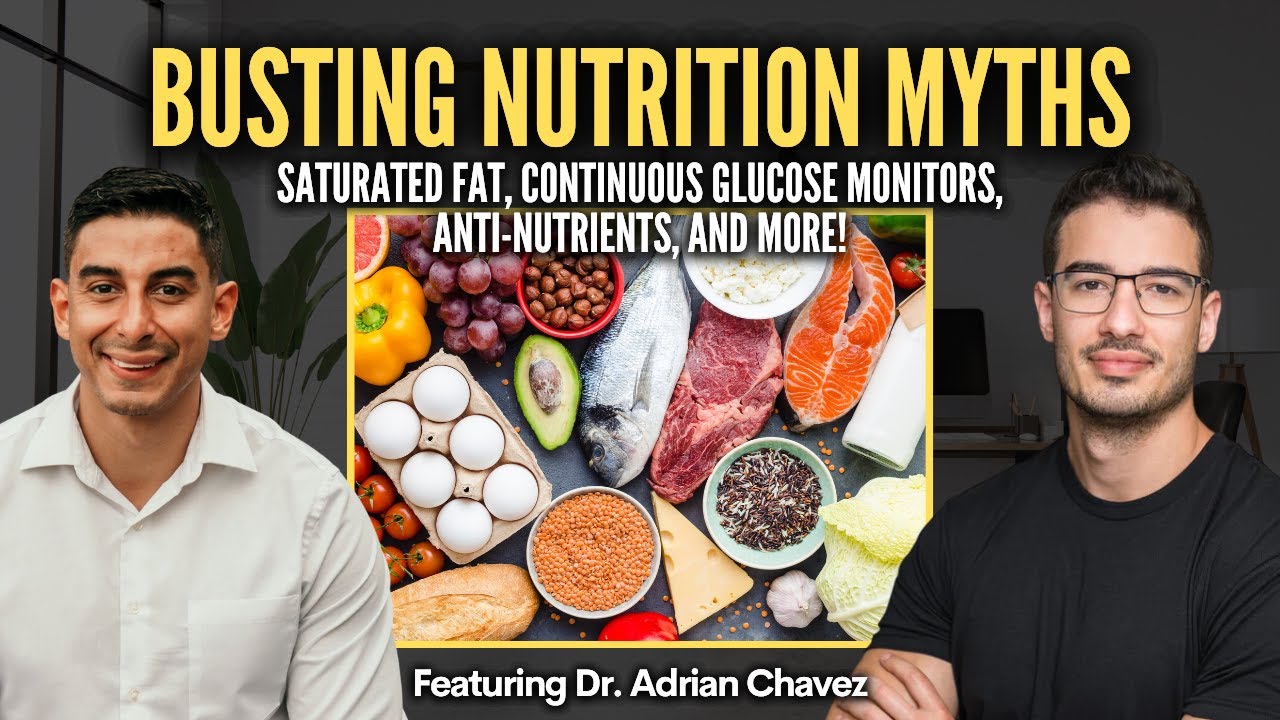
LDL cholesterol remains a well-established marker for cardiovascular risk. A normal blood sugar spike after eating carbs isn't dangerous, only chronically elevated glucose is a concern. And "anti-nutrients" like lectins and phytates aren't a meaningful threat for most people eating a normal, varied diet, since the studies raising alarm about them use unrealistic concentrations.
Social media is full of confident claims that oversimplify genuinely nuanced nutrition science. Dr. Adrian Chavez helps unpack three of the most persistent myths: LDL cholesterol not mattering, glucose spikes being dangerous, and anti-nutrients being something to fear.
Myth One: LDL Cholesterol Doesn't Matter
"LDL cholesterol is an outdated, irrelevant marker that doesn't actually predict heart disease."
LDL cholesterol is a marker for apoB-containing lipoproteins, particles that carry cholesterol through your bloodstream and can become lodged in artery walls, contributing to plaque buildup over time. This connection between elevated LDL and cardiovascular risk is one of the most well-established findings in the research, supported across a large body of literature, not just a single cherry-picked study.
When you actually read all of the studies, you can't question it. But when you pull a single study, you can make it seem like something else is happening.
Myth Two: A Glucose Spike Is Dangerous
Continuous glucose monitors have become popular even among people without diabetes, often paired with the belief that any rise in blood sugar after eating is inherently harmful. Dr. Chavez pushes back on this directly: your blood sugar going up temporarily after eating carbohydrates, then coming back down, is a completely normal, healthy physiological response.
If your glucose level is 90 at baseline and it goes up to 140 or 150 after a meal, and comes right back down, that's fine. It's not an issue, your body can handle that.
What actually matters is chronic glucose elevation, measured through markers like hemoglobin A1c, not a normal spike and return following a meal. Fearing a normal spike can push people away from otherwise healthy foods, like fruit, out of unnecessary caution.
Myth Three: Anti-Nutrients Are a Serious Threat
Compounds like lectins, phytates, and oxalates are often framed online as dangerous "anti-nutrients" that damage your health. Dr. Chavez points out that much of the evidence behind this fear comes from cell culture studies, where these compounds are mixed with immune cells at concentrations far beyond what you'd ever realistically consume through food.
This ties into a broader misunderstanding about inflammation itself: inflammation isn't inherently bad, it's a necessary process your body uses to fight infection and heal. Just like blood glucose or cholesterol, having zero inflammation would actually be dangerous. It's chronic, persistently elevated inflammation that's the actual concern, not the normal, protective inflammatory response most of these compounds might trigger at typical dietary levels.
- LDL cholesterol remains a well-established, consistently supported marker for cardiovascular disease risk.
- A normal blood sugar spike after eating carbs, followed by a return to baseline, is healthy and expected.
- Chronic glucose elevation, not a temporary post-meal spike, is what actually matters for long-term health.
- Claims about anti-nutrients often rely on cell culture studies using concentrations far beyond normal dietary exposure.
- Inflammation, glucose, and cholesterol are all necessary bodily processes that only become harmful when chronically elevated.
A lot of viral nutrition fear comes down to treating a normal, temporary bodily process as a red flag. Understanding the difference between a healthy fluctuation and genuine chronic dysfunction is one of the most useful nutrition literacy skills you can build.
Frequently Asked Questions
Does LDL cholesterol actually matter for heart disease risk?
Yes. LDL cholesterol is a well-established marker for apoB-containing lipoproteins, particles that can lodge in artery walls and contribute to plaque buildup. This connection is one of the most consistently supported findings in cardiovascular research.
Is a blood sugar spike after eating carbs always something to worry about?
No. A temporary rise in blood glucose after eating carbohydrates, followed by a return to baseline, is a normal, healthy physiological response. What matters for long-term health is chronic glucose elevation, not a normal, transient spike.
Are anti-nutrients like lectins and phytates something to actively avoid?
For most people eating a normal, varied diet, no. Claims about anti-nutrients often rely on cell culture studies using concentrations far beyond typical dietary exposure, which doesn't reflect what actually happens when these compounds are consumed as part of whole foods.
Is inflammation always bad for your health?
No. Inflammation is a necessary, protective process your body uses to fight infection and heal injury. It only becomes harmful when it's chronically elevated over a long period, not when it occurs as a normal, temporary response.
Ready to Build a Body That Lasts?
Science-backed coaching for busy professionals over 40. Apply today for nutrition guidance grounded in real evidence, not fear.
Apply Now →